
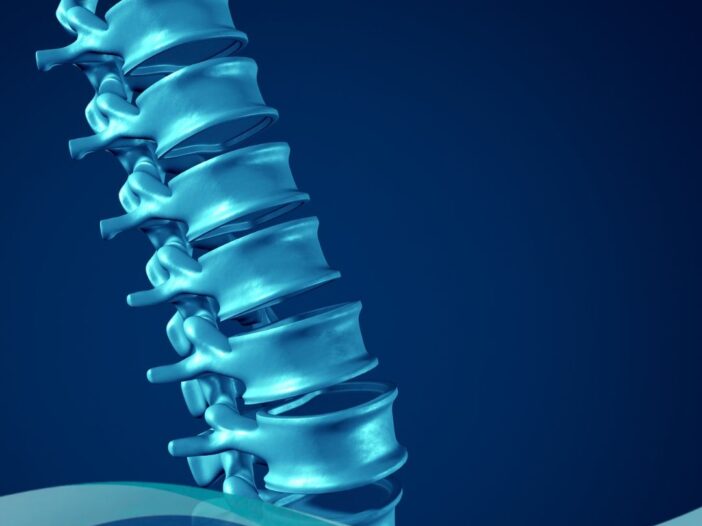
Overall, less than 5% of our patients require surgery, but questions around the length of time involved and recovery rates are often top in people’s minds.
As orthopaedic consultant Adam Way shared in a recent presentation, these are some of the questions they ask Adam’s PA about spinal surgery before booking an appointment.
(Please remember, these questions and answers are for general information and do not replace personalised medical advice you would receive in a consultation with a Joint Reaction specialist spinal surgeon.)
Top questions about back and spinal surgery
An MRI (Magnetic Resonance Imaging)scan is an essential tool for the diagnosis of many spinal problems, creating detailed images of the spinal cord, vertebrae, discs, nerves, and associated muscles and blood vessels. A specialist orthopaedic consultant will only send you for an MRI after examining you in person. This avoids an unnecessary scan if your problem is more muscular in nature or does not require a detailed image. Your consultant can also request a specific and precise angles of imaging if required, to better investigate specific points on the cervical, thoracic, and lumbar sections of the spine.
Your GP will therefore refer you to a consultant rather than simply order a scan. The main delay for most patients who do actually require an MRI scan is the waiting time between referral and appointment. A private consultant can often see you within a few days, and organise any scans required within a week or so, depending on scanner availability.
The duration of spinal surgery very much depends on what you are having done. Microdiscectomy or decompression surgery, for example, may take only an hour, but other more complex fusion operations may take a few hours. Once your consultant has made a diagnosis and examined the results of any scans and tests required, they will be able to give you a more accurate description of what is involved and how long it may take.
Again, it very much depends on what procedure you have had, your age, your physical fitness at the time of your surgery and (most importantly) sticking to the post-surgery treatment and recovery plan set out by your consultant. It is crucial that you follow this, attend all associated appointments such as physiotherapy and wound care, and do not try to do too much too soon, especially in terms of exercise.
Patients who are careful and mindful of the need to follow their rehabilitation plan properly may be able to return to work after two weeks. Others may require longer depending on their degree of mobility. Overall, a typical recovery time is between 4 to 6 weeks, usually involving regular physiotherapy and prescribed exercises phased in gradually.
One of the advantages of “going private” for back and spine surgery is that your consultant can put in place more frequent, targeted and longer physiotherapy sessions to support a more sustained recovery and rehabilitation.
You need to be safe to drive both for yourself and other road users. Mr Way has two key criteria as an absolute minimum:
• You can turn your head and neck sufficiently to see into your blind spot. (Your physiotherapist can help you assess this.)
AND
• You can safely stamp down hard on the brake pedal to do an emergency stop.
Also be aware of other conditions such as how well your seat supports you and also getting in and out of the car in a tight parking space.
The standard default advice is that you should not fly until six weeks after surgery. However, this can depend on the type of flight you are taking, and how well your recovery is progressing. Short-haul flights may be possible after 3–4 weeks, if you:
• Book an aisle seat
• Take aspirin before the flight
• Stand up and move around at frequent intervals
• Drink plenty of fluids and avoid alcohol during the flight
It is likely that you will already be wearing DVT (compression) stockings, as six weeks pre or post-op is often suggested. Two weeks may be sufficient in some cases.
Gentle exercise will be included in your post-operative treatment plan, and should be followed as recommended by your consultant and your physiotherapist. It is important not to try and rush the healing process and start to exercise too early. At the beginning of your rehabilitation, just a gentle walk to your front gate and back may be sufficient.
Many of Mr Way’s patients love their sports, and enjoy playing them for longer than previous generations may have. We may push our bodies more, and when injured or have surgery, want a quick fix so we can get back to what we love doing more quickly. However, as we get older, we need to accept that our bodies take longer to heal and recover as part of the natural aging process.
Mr Way suggests that whilst certain sports may be off-limits for a while, swimming, cycling and walking are a good way back into regular exercise. Generally, once the wound has healed, most patients can begin to cycle and swim 4 weeks after their surgery. Gentle gym work may be allowed, and Mr Way also often suggests yoga and Pilates to help build (or rebuild) reasonable core strength. As with all recovery and rehabilitation, little and fairly often is much more effective than longer exercise sessions once or two a week.
Certain sports must be on hold for longer such as rowing (2-3 months) and golf (3 months min).
How to contact Joint Reaction for a consultation with our spinal consultants
Most people who contact Joint Reaction prefer to do so by phone.
- If you know the consultant you’d like to make an appointment with, you can call their secretary direct.
- If you’re not sure, you can talk through your choice with our Practice Manager.
Both are able to book your rapid appointment with one of our specialist orthopaedic consultants, but please be aware they cannot offer any form of medical advice or answer your questions as a consultant would!
Initial consultations start at just £295, with no GP referral or private medical insurance required. One of our orthopaedic consultants will usually be able to see you in just a few days, not weeks.
For more information:
ABOUT THE AUTHOR
This article was co-written with expert insight and practice-based examples by Joint Reaction Consultant Orthopaedic Surgeon Mr Adam Way, based on his presentation at the September 2026 Joint Reaction CPD seminar.
IMPORTANT: This article is for your information only. It is not intended as a substitute for professional medical advice or diagnosis. When you first meet your Joint Reaction consultant, they will discuss any issues, previous diagnosis or scans you may have.
Article published: October 2026.
SOURCES:
Image source: © [wildpixel from Getty Images] via Canva.com